
Our Topics in 2021: Meeting of the Educational Committee on June, 26th 2020
Against the background of the current pandemic, this year’s meeting could only take place with 10 instead of the usual 15 delegates of the scholarship holders.
Page 7 of 7
Against the background of the current pandemic, this year’s meeting could only take place with 10 instead of the usual 15 delegates of the scholarship holders.
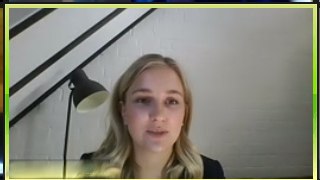
Due to the current valid restrictions caused by the coronavirus, KAAD , just as numerous other institutions , also had to reconsider its usual ways of conducting seminars and be open to try new formats for its educatio...

In the midst of unexpectedly challenging times, also for the academic landscape and the international development policy, KAAD looks back on a successful year 2019 in its recently published annual report. KAAD was able t...
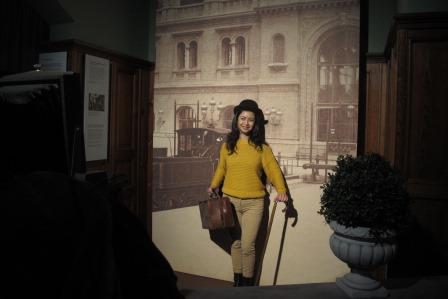
People have always formed a picture of the world they lived in and tried to imagine it according to their possibilities. In order to explain this, Prof Ingeborg Reichle from the University of Applied Arts Vienna introduc...
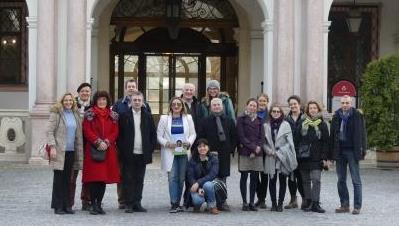
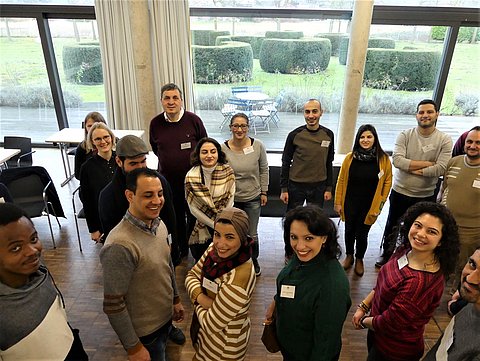
Symmetry and Diversity , this was the topic of the KAAD Alumni Conference taking place in the educational centre Mater Salvatoris in Gödöllö/Hungary from 23rd to 26th February. Just as diverse as the topic suggested was...
Johann Wolfgang Goethe, West-östlicher Divan, Buch des Unmuts

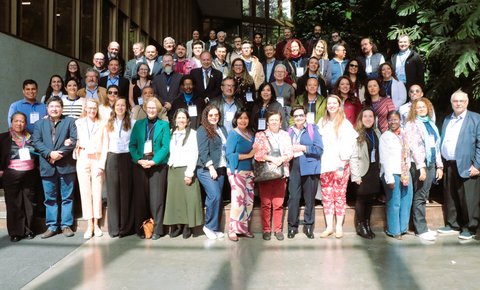
In cooperation with our alumni group ‘Salud Global’ (‘Global Health’), the successes of the interdisciplinary research project ‘Neurorehab’ by our alumna Prof Dr Fabiana Faleiros at the University of São Paulo were prese...

Who gets access to good education in Latin America , and who is left out? This was the key question at the Latin America seminar, which took place at the Franz Hitze-Haus in Münster from December 8 to 11, 2025.

On 26 th of April, 17 graduates of the second cohort of the Master's degree course in Social Pedagogy celebrated at the Faculty of Humanities of the University of Rafael Landívar .

The focus of the trip of our Head of the Latin America Department, Dr Thomas Krüggeler, was his attendance at an event on the challenges of socio-educational work in Guatemala and Central America.
Artificial intelligence is transforming societies around the world , but who develops it, whose knowledge does it reflect, and who bears its social and environmental costs?
Page 7 of 7
Funded by



Event partner
WissenWeek